Your cart is empty.
Understanding the Water Cycle
Completion requirements
1. Evaporation
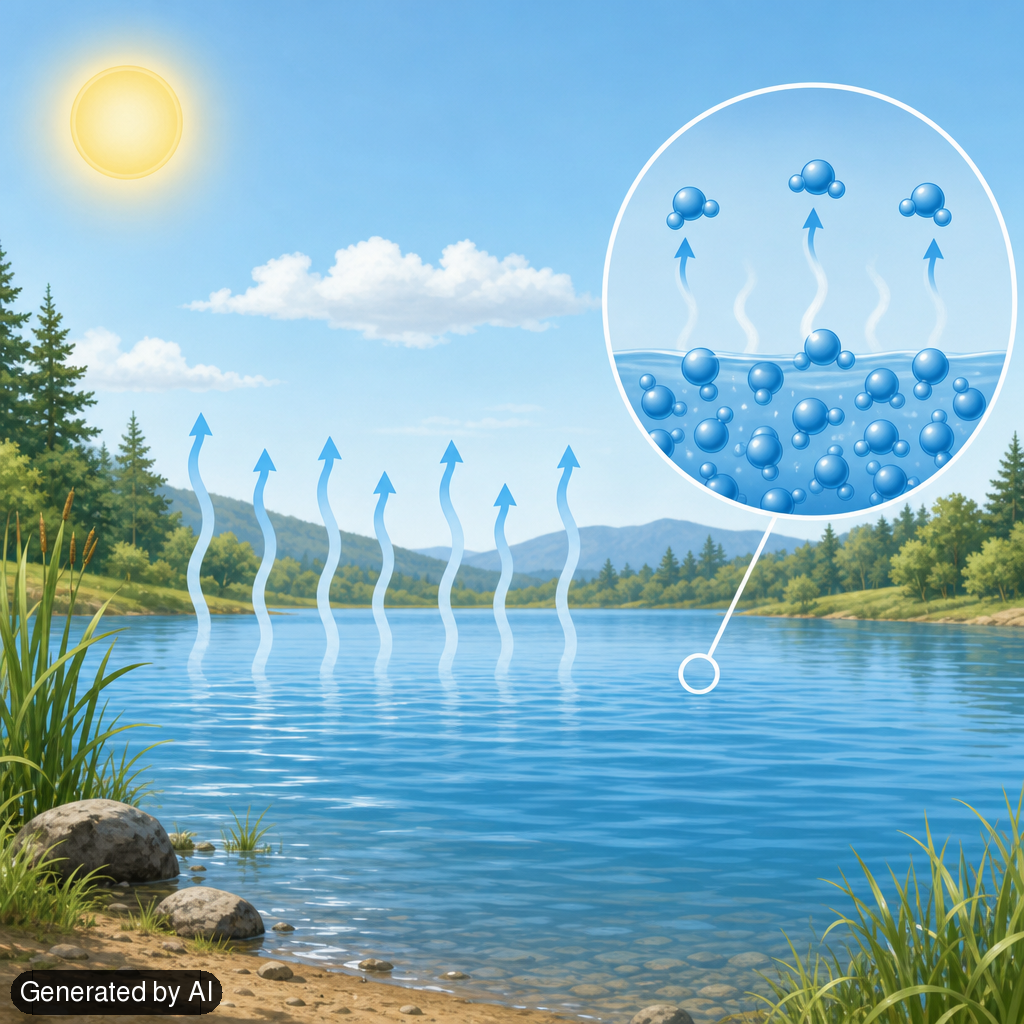
Evaporation
Introduction to Evaporation
Evaporation is the process by which water changes from a liquid to a gaseous state. This step is crucial in the water cycle, turning water from lakes, rivers, and oceans into water vapor in the air.
How Evaporation Occurs
When the sun heats up bodies of water, the energy causes water molecules to move faster and eventually break away from the surface into the air. This change of state requires heat, which is absorbed from the environment, often cooling the surrounding surface.
Key Factors Influencing Evaporation
- Temperature: Higher temperatures increase the rate of evaporation.
- Surface Area: Larger surface areas allow more water to evaporate.
- Humidity: Lower humidity in the air increases evaporation rates since there's less water vapor to saturate the air.
- Wind Speed: Wind can carry away water vapor, speeding up evaporation.
Examples of Evaporation
- Wet clothes drying in the sun: The heat causes water in the fabric to evaporate.
- Puddles evaporating after rain: Sunlight heats the surface, turning the water into vapor.
'Evaporation plays a vital role in the water cycle by redistributing water globally.'
Understanding evaporation helps us comprehend how substances transition between different states of matter and how they interact with environmental conditions.