Understanding the Water Cycle
| Site: | Development |
| Course: | Zombie Office Apocalypse |
| Book: | Understanding the Water Cycle |
| Printed by: | Guest user |
| Date: | Wednesday, 2 September 2026, 7:40 AM |
1. Evaporation
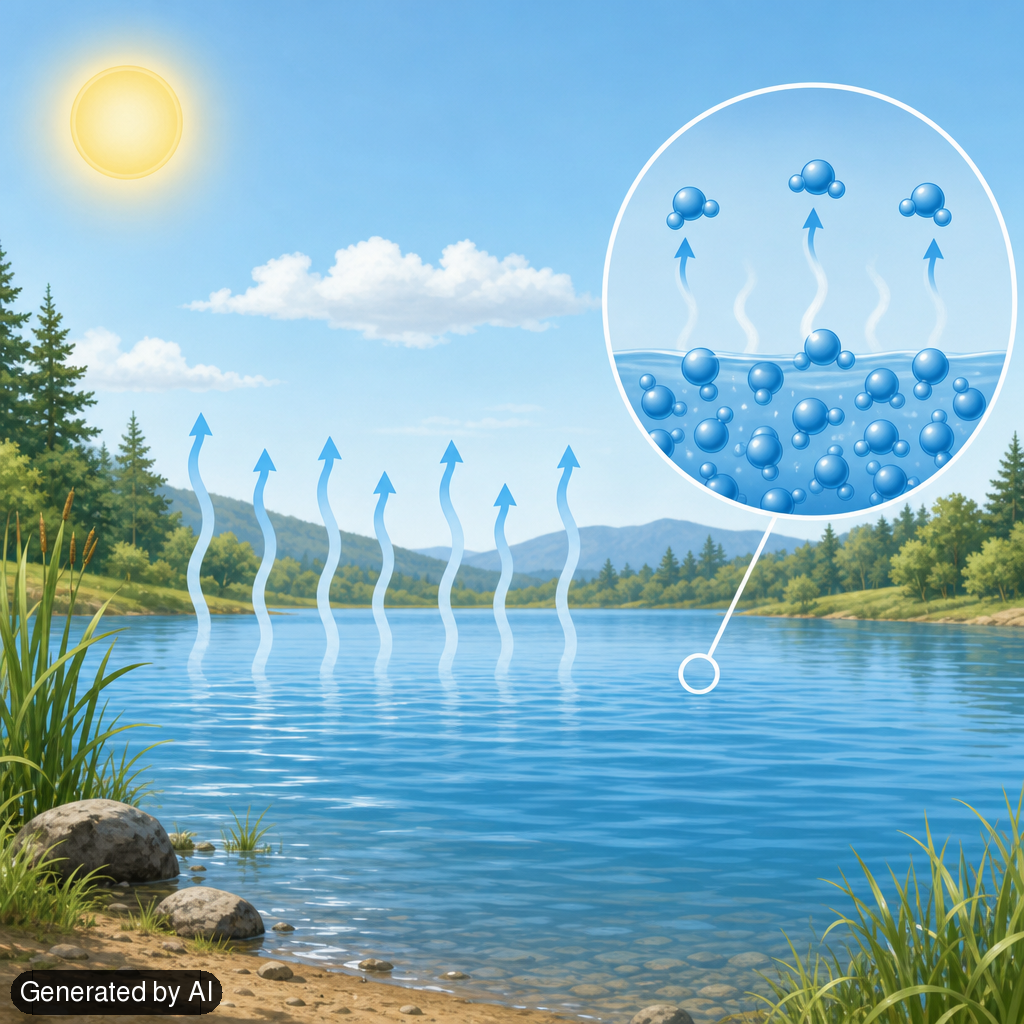
Evaporation
Introduction to Evaporation
Evaporation is the process by which water changes from a liquid to a gaseous state. This step is crucial in the water cycle, turning water from lakes, rivers, and oceans into water vapor in the air.
How Evaporation Occurs
When the sun heats up bodies of water, the energy causes water molecules to move faster and eventually break away from the surface into the air. This change of state requires heat, which is absorbed from the environment, often cooling the surrounding surface.
Key Factors Influencing Evaporation
- Temperature: Higher temperatures increase the rate of evaporation.
- Surface Area: Larger surface areas allow more water to evaporate.
- Humidity: Lower humidity in the air increases evaporation rates since there's less water vapor to saturate the air.
- Wind Speed: Wind can carry away water vapor, speeding up evaporation.
Examples of Evaporation
- Wet clothes drying in the sun: The heat causes water in the fabric to evaporate.
- Puddles evaporating after rain: Sunlight heats the surface, turning the water into vapor.
'Evaporation plays a vital role in the water cycle by redistributing water globally.'
Understanding evaporation helps us comprehend how substances transition between different states of matter and how they interact with environmental conditions.
2. Condensation
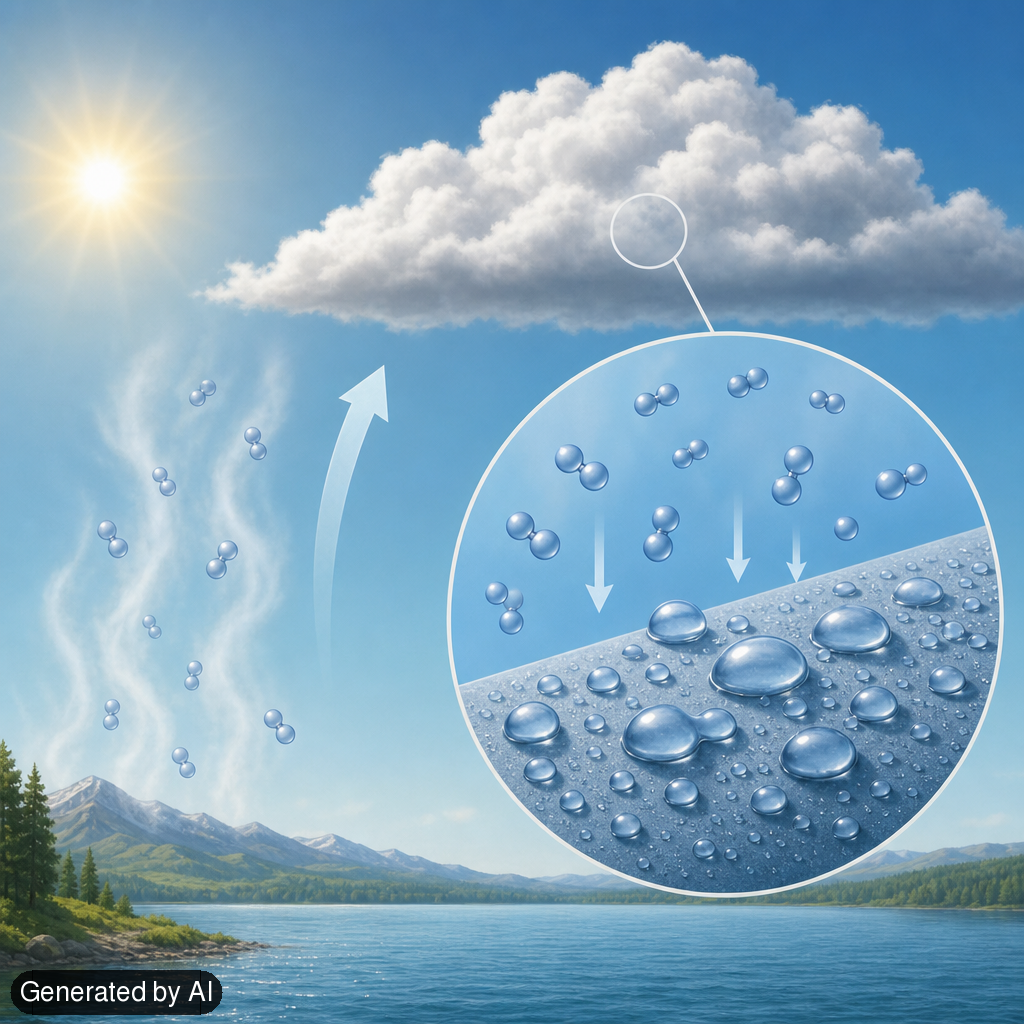
Condensation
Understanding Condensation
Condensation is the process where water vapor in the air is changed into liquid water. This occurs when air containing water vapor cools and reaches saturation, where it cannot hold any more moisture.
How Condensation Occurs
As warm air containing water vapor rises and cools, the vapor condenses into tiny droplets, forming clouds or dew. This transformation releases heat, which warms the surrounding atmosphere, a process known as latent heat release.
Key Factors Influencing Condensation
- Temperature: Colder temperatures encourage condensation as cooler air holds less moisture.
- Humidity: Higher humidity increases the likelihood of condensation due to more water vapor available to condense.
- Presence of Particles: Dust or smoke in the air can provide surfaces for water vapor to condense upon.
Examples of Condensation
- Dew formation on grass: Overnight cooling leads to water vapor condensing on blades of grass.
- Foggy windows: Warm, moist air meeting a cold surface leads to condensation.
'Condensation is fundamental to cloud formation and precipitation, essential components of the water cycle.'
Appreciating condensation allows us to understand atmospheric phenomena and weather patterns better.
3. Precipitation
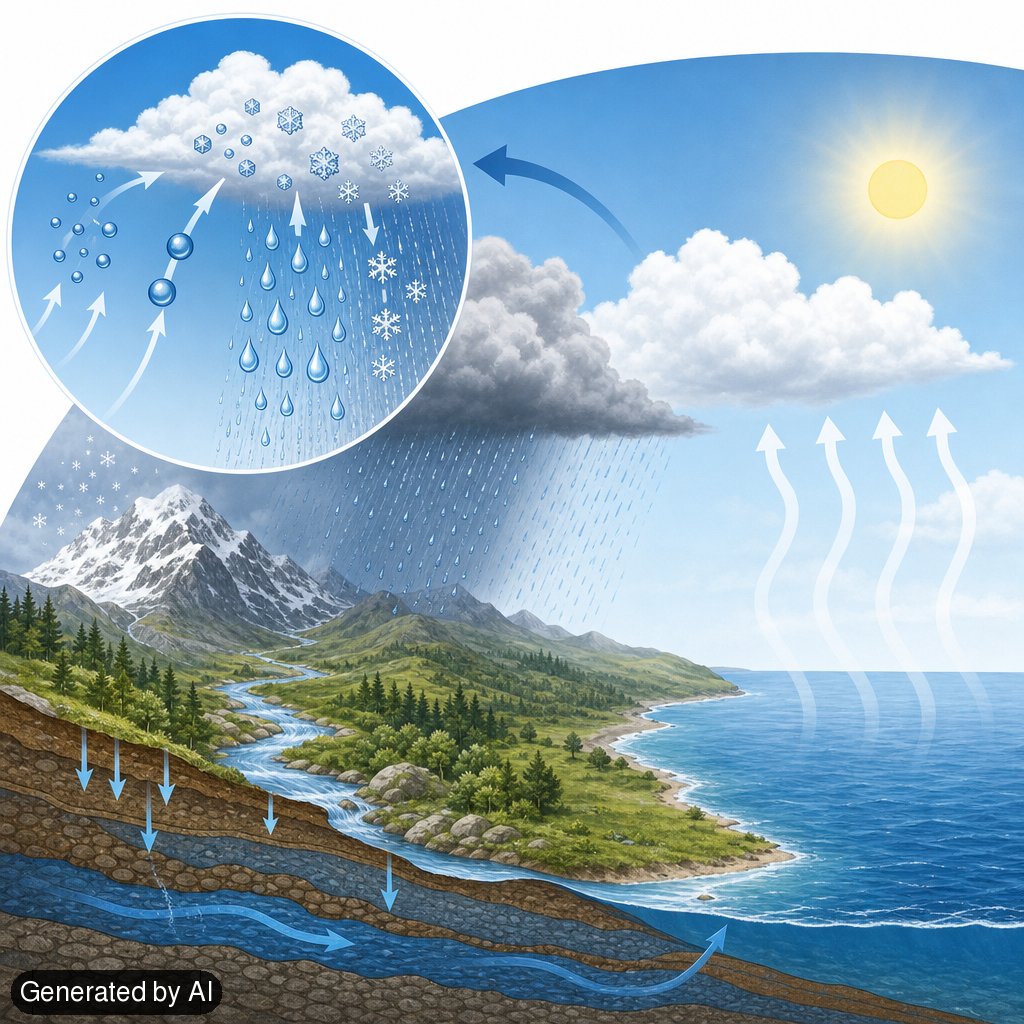
Precipitation
The Role of Precipitation in the Water Cycle
Precipitation is the process where condensed water in the clouds falls to the Earth's surface. It is a critical part of the water cycle, returning water from the atmosphere to the ground.
Types of Precipitation
Precipitation can occur in various forms depending on atmospheric conditions. These include:
- Rain: Liquid precipitation falling when temperatures are above freezing.
- Snow: Ice crystals forming delicate flakes when temperatures are below freezing.
- Sleet: Small ice pellets occurring when rain freezes before hitting the ground.
- Hail: Larger ice pellets formed during intense thunderstorms.
Formation of Precipitation
Precipitation forms within clouds when water droplets combine to become heavy enough to overcome air resistance and gravity. Factors such as air temperature, wind, and atmospheric pressure can influence precipitation types and amounts.
Examples and Impacts of Precipitation
- Agriculture: Precipitation provides essential water for crops and livestock.
- Natural Water Supply: It replenishes groundwater and bodies of water, supporting ecosystems and human needs.
'Precipitation is vital for replenishing Earth's freshwater sources, sustaining life, and influencing weather and climate patterns.'
Understanding precipitation helps us predict weather, prepare for extreme events, and manage water resources effectively.
4. Collection
Collection
What is Collection?
Collection refers to the process where water after precipitation is gathered into bodies like rivers, lakes, groundwater, and oceans. This process completes the cycle, allowing water to desalinate, evaporate, and precipitate again.
Pathways of Collection
- Surface Runoff: Water flows over the ground, reaching water bodies.
- Infiltration: Water seeps into the soil, replenishing groundwater supplies.
- River Systems: Networks of rivers and streams channel water towards oceans and lakes.
Importance of Collection
Collection is crucial for maintaining the availability of water for ecosystems, human use, and climate regulation. It influences:
- Water Availability: Ensures a continuous supply of fresh water.
- Flood Control: Proper collection channels prevent flooding damage.
- Ecosystems: Supports biodiversity by providing habitats and resources.
Examples of Water Collection
- Wetlands: Act as natural water collectors, filtering pollutants.
- Reservoirs and Dams: Man-made structures designed to store water for later use.
'The collection process is a balancing act that supports the water cycle, ecosystems, and human societies.'
Collection helps us understand the sustainability of our water resources and the need for conservation efforts.