Your cart is empty.
Understanding the Water Cycle
Completion requirements
2. Condensation
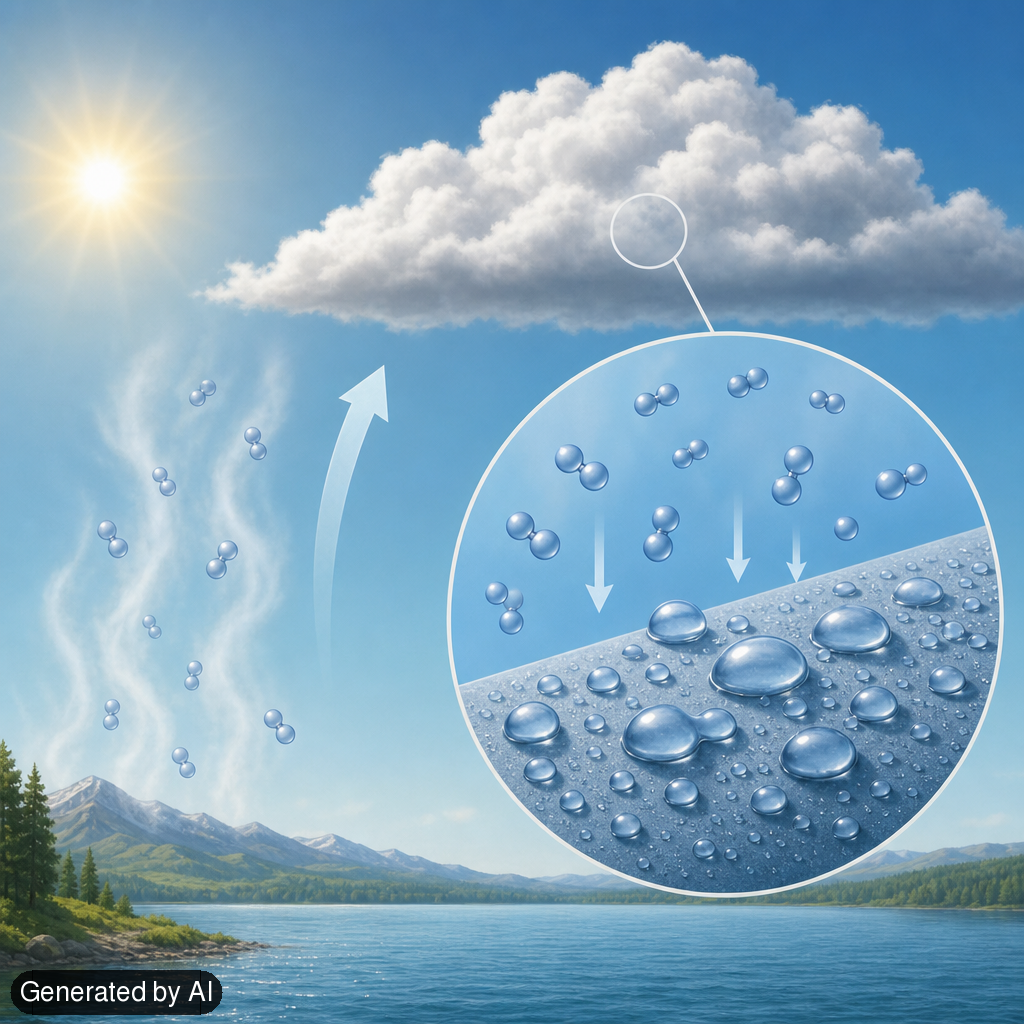
Condensation
Understanding Condensation
Condensation is the process where water vapor in the air is changed into liquid water. This occurs when air containing water vapor cools and reaches saturation, where it cannot hold any more moisture.
How Condensation Occurs
As warm air containing water vapor rises and cools, the vapor condenses into tiny droplets, forming clouds or dew. This transformation releases heat, which warms the surrounding atmosphere, a process known as latent heat release.
Key Factors Influencing Condensation
- Temperature: Colder temperatures encourage condensation as cooler air holds less moisture.
- Humidity: Higher humidity increases the likelihood of condensation due to more water vapor available to condense.
- Presence of Particles: Dust or smoke in the air can provide surfaces for water vapor to condense upon.
Examples of Condensation
- Dew formation on grass: Overnight cooling leads to water vapor condensing on blades of grass.
- Foggy windows: Warm, moist air meeting a cold surface leads to condensation.
'Condensation is fundamental to cloud formation and precipitation, essential components of the water cycle.'
Appreciating condensation allows us to understand atmospheric phenomena and weather patterns better.