Your cart is empty.
Summary of the Water Cycle
Completion requirements
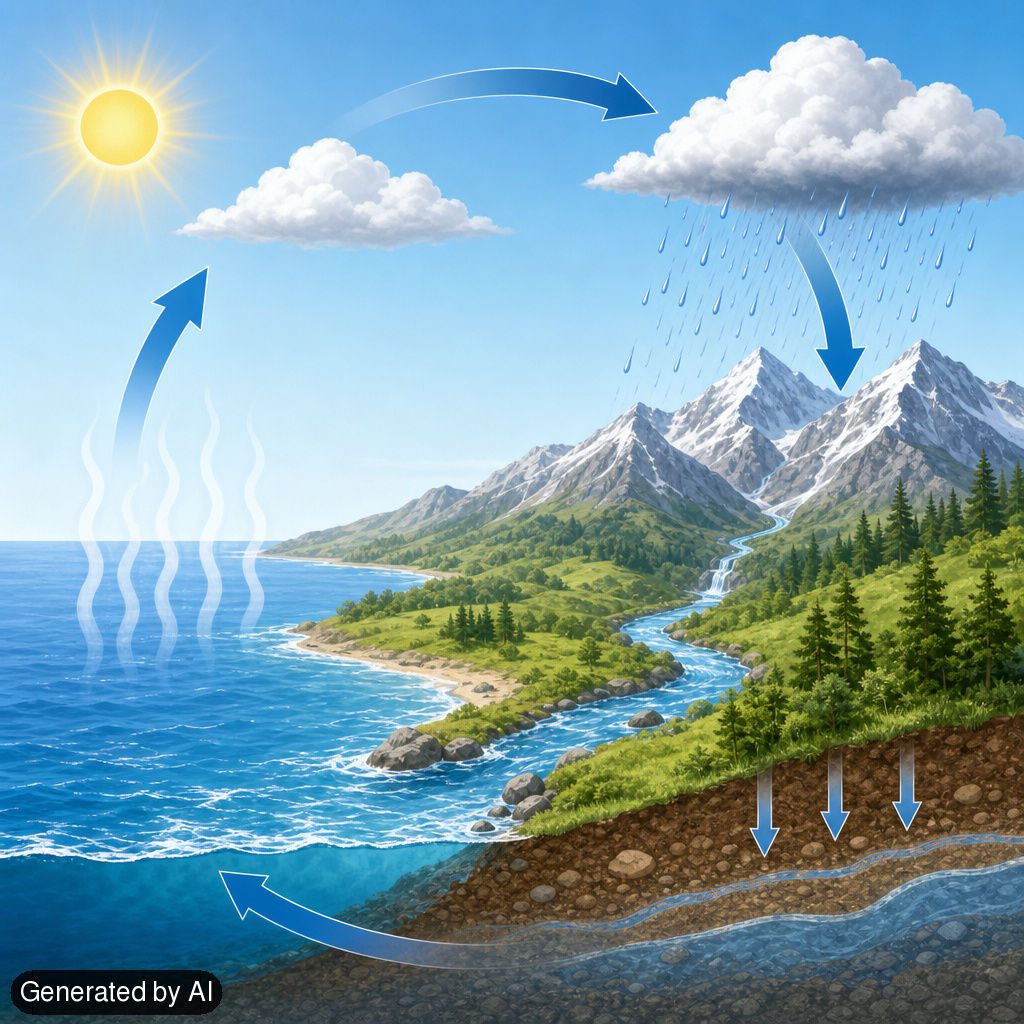
The Water Cycle
The water cycle, also known as the hydrological cycle, is a continuous process by which water circulates through the Earth's atmosphere, land, and oceans. This cycle is essential for maintaining life and the health of the planet. In this lesson, we will explore each stage of the water cycle: evaporation, condensation, precipitation, and collection.
Stages of the Water Cycle
1. Evaporation
Evaporation is the process by which water is converted from its liquid form to vapor. This transformation occurs when the sun heats water in rivers, lakes, and oceans. The heat increases the energy of water molecules, causing them to rise into the atmosphere.
- Key Definition: Evaporation - The process of turning from liquid into vapor.
- Example: Water in a puddle disappearing after the sun comes out is evaporation.
2. Condensation
Condensation occurs when water vapor in the air cools down and changes back into liquid droplets. This process is essential for cloud formation in the sky. As water vapor rises higher into the atmosphere, it encounters cooler temperatures, which leads to condensation.
- Key Definition: Condensation - The change of state from a gas to a liquid.
- Example: The formation of dew on grass is due to condensation.
3. Precipitation
Precipitation refers to any form of water that falls from clouds and reaches the ground. This includes rain, snow, sleet, and hail. Precipitation occurs when the droplets in clouds become too heavy to remain airborne, due to condensation.
- Key Definition: Precipitation - The action or process of precipitating a substance from a solution.
- Example: Rainfall that waters crops is a common form of precipitation.
4. Collection
After precipitation occurs, the collected water is stored in various natural reservoirs. This stage is crucial for maintaining water supply for ecosystems and human use. Water collects in bodies like rivers, lakes, and oceans, and is then available to start the cycle again through evaporation.
- Key Definition: Collection - The process of gathering or accumulating water.
- Example: Water gathering as a river after rain.
Importance of the Water Cycle
- Meteorological Impact: The cycle is responsible for significant weather patterns, including storms and droughts.
- Environmental Balance: It maintains the ecological balance by ensuring that water is distributed across different regions and ecosystems.
- Human Usage: The cycle replenishes groundwater and surface water, critical for agriculture, industry, and domestic usage.
“Water is the driving force of all nature.” – Leonardo da Vinci
Conclusion
Understanding the water cycle is fundamental for appreciating the Earth's natural processes. It not only supports life but also affects climate and weather patterns. By studying each step—evaporation, condensation, precipitation, and collection—we gain insights into the dynamic movement of water and its critical importance in our world. Encourage the examination of local water bodies and weather patterns to visualize how the water cycle is happening around you every day.
By knowing how each part contributes to the whole, students can look out at a heavy rain or a bright, sunny day with newfound knowledge about the intricate process sustaining our environment.
Last modified: Saturday, 8 August 2026, 7:16 PM