Understanding the Water Cycle
3. Precipitation
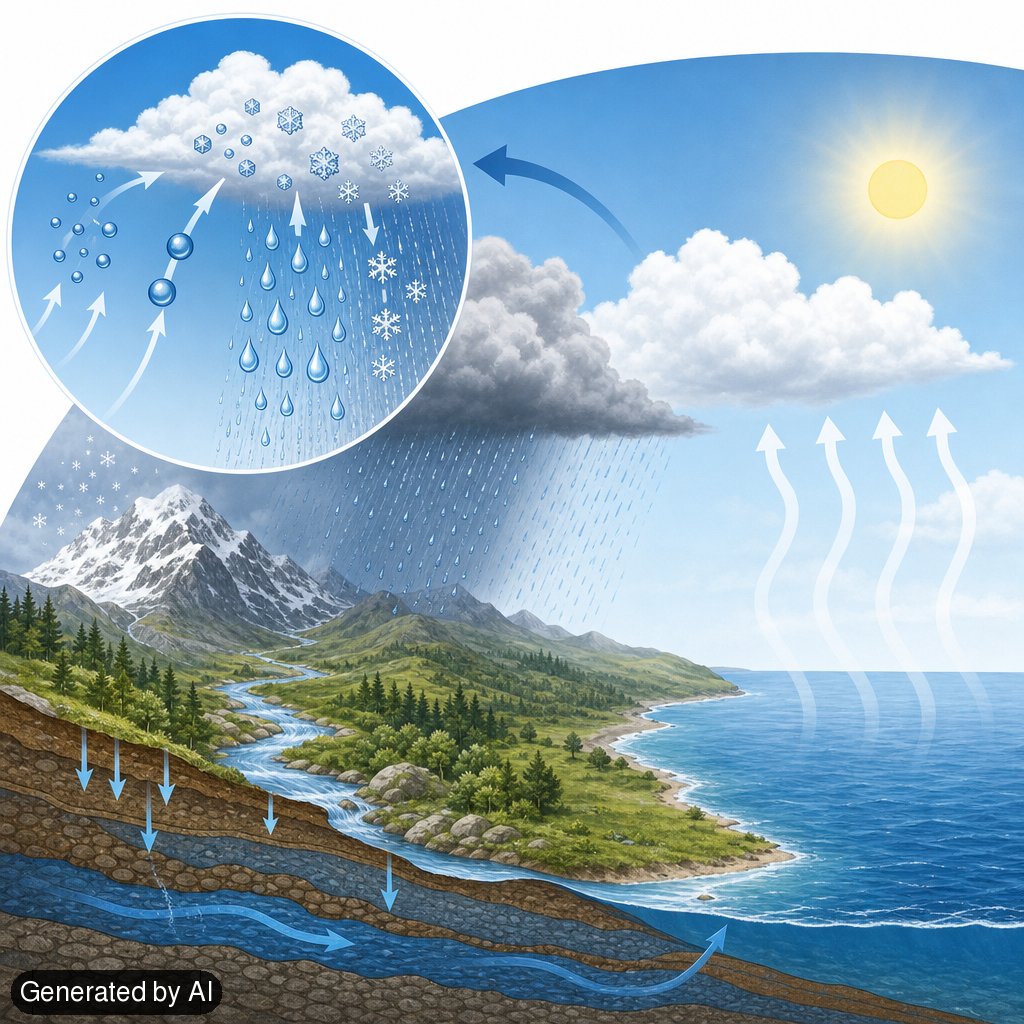
Precipitation
The Role of Precipitation in the Water Cycle
Precipitation is the process where condensed water in the clouds falls to the Earth's surface. It is a critical part of the water cycle, returning water from the atmosphere to the ground.
Types of Precipitation
Precipitation can occur in various forms depending on atmospheric conditions. These include:
- Rain: Liquid precipitation falling when temperatures are above freezing.
- Snow: Ice crystals forming delicate flakes when temperatures are below freezing.
- Sleet: Small ice pellets occurring when rain freezes before hitting the ground.
- Hail: Larger ice pellets formed during intense thunderstorms.
Formation of Precipitation
Precipitation forms within clouds when water droplets combine to become heavy enough to overcome air resistance and gravity. Factors such as air temperature, wind, and atmospheric pressure can influence precipitation types and amounts.
Examples and Impacts of Precipitation
- Agriculture: Precipitation provides essential water for crops and livestock.
- Natural Water Supply: It replenishes groundwater and bodies of water, supporting ecosystems and human needs.
'Precipitation is vital for replenishing Earth's freshwater sources, sustaining life, and influencing weather and climate patterns.'
Understanding precipitation helps us predict weather, prepare for extreme events, and manage water resources effectively.